Spreadsheets vs compliance software: the case for both, honestly
Every compliance vendor's real competitor isn't another vendor: it's the spreadsheet you already have, which costs nothing, bends to your will, and has run your estate adequately for years.
So this page does something vendor pages usually don't: it starts with when the spreadsheet is genuinely enough, then maps exactly where the wheels come off, and lets you decide which side of the line your estate sits on. No scare tactics; the free option deserves a fair hearing.
When the spreadsheet is genuinely enough
The case for staying put
A small single site. A modest set of statutory assets. One well-organised owner who checks the sheet weekly and isn't leaving. Evidence volumes low enough to file by hand, and no trust above you asking for a rollup. If that's your school, a disciplined spreadsheet regime is defensible, auditors accept it, and the £650 a year is better spent elsewhere: the discipline matters more than the software. Nothing below is written to frighten you out of it.
The five failure points
The person. The spreadsheet is really a person wearing a filename. When the site manager who understands it retires, is off sick in inspection week, or leaves in July, the regime leaves with them.
The reminder. Cells don't chase. The sheet knows the gas service is due; it cannot email ProHeat, escalate when they slip, or notice the contractor's insurance lapsed in June.
The evidence. "Done ✓" in a cell is an assertion. The timestamped photo of the fire door, the certificate on the job that produced it, the named signatory: those live somewhere else, if they live anywhere.
The many hands. Spreadsheets are single-player. The caretaker's walk, the teacher's fault report and the contractor's update all reach the sheet through one person's typing, or don't reach it at all.
The rollup. A trust of nine schools has nine sheets, nine formats and a termly copy-and-paste ritual that answers every question except "what's true today?", the exact question the DfE's annual estate returns from autumn 2026 will keep asking.
Job by job, fairly scored
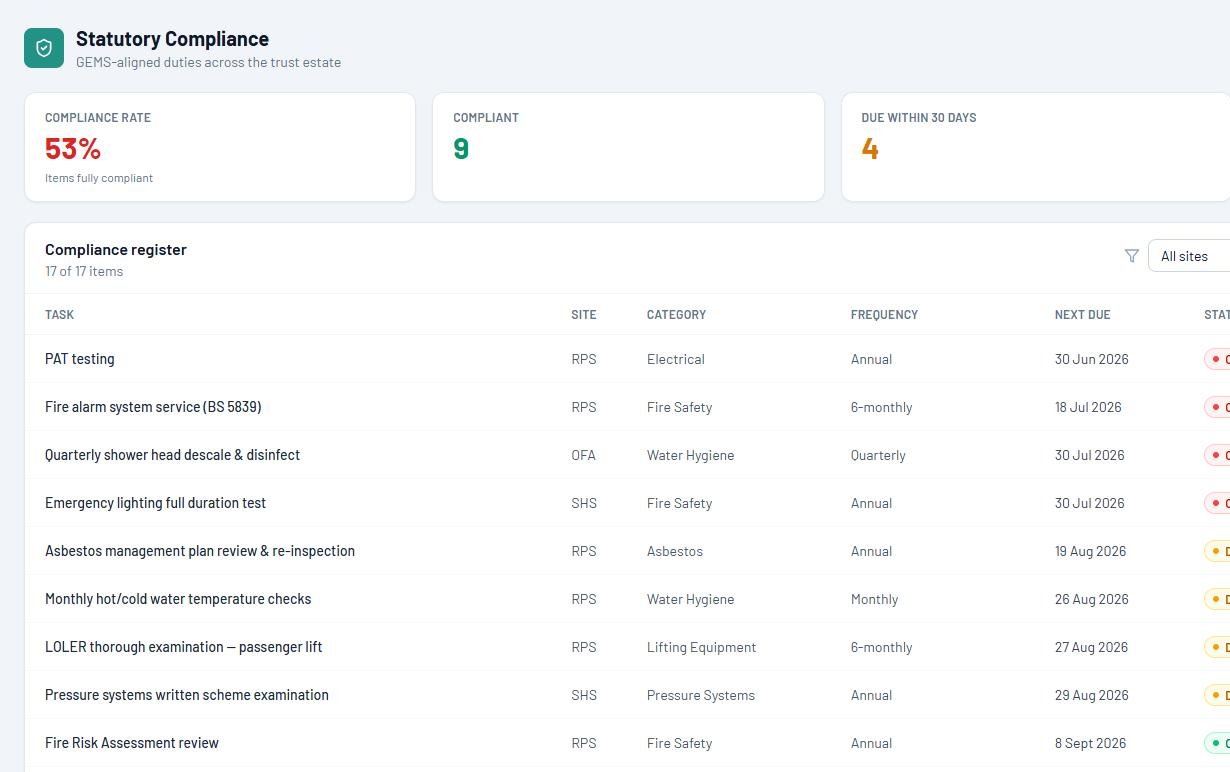
| The job | A good spreadsheet | Compliance software |
|---|---|---|
| Hold the statutory schedule | Yes: if built and maintained correctly | Yes: seeded on day one |
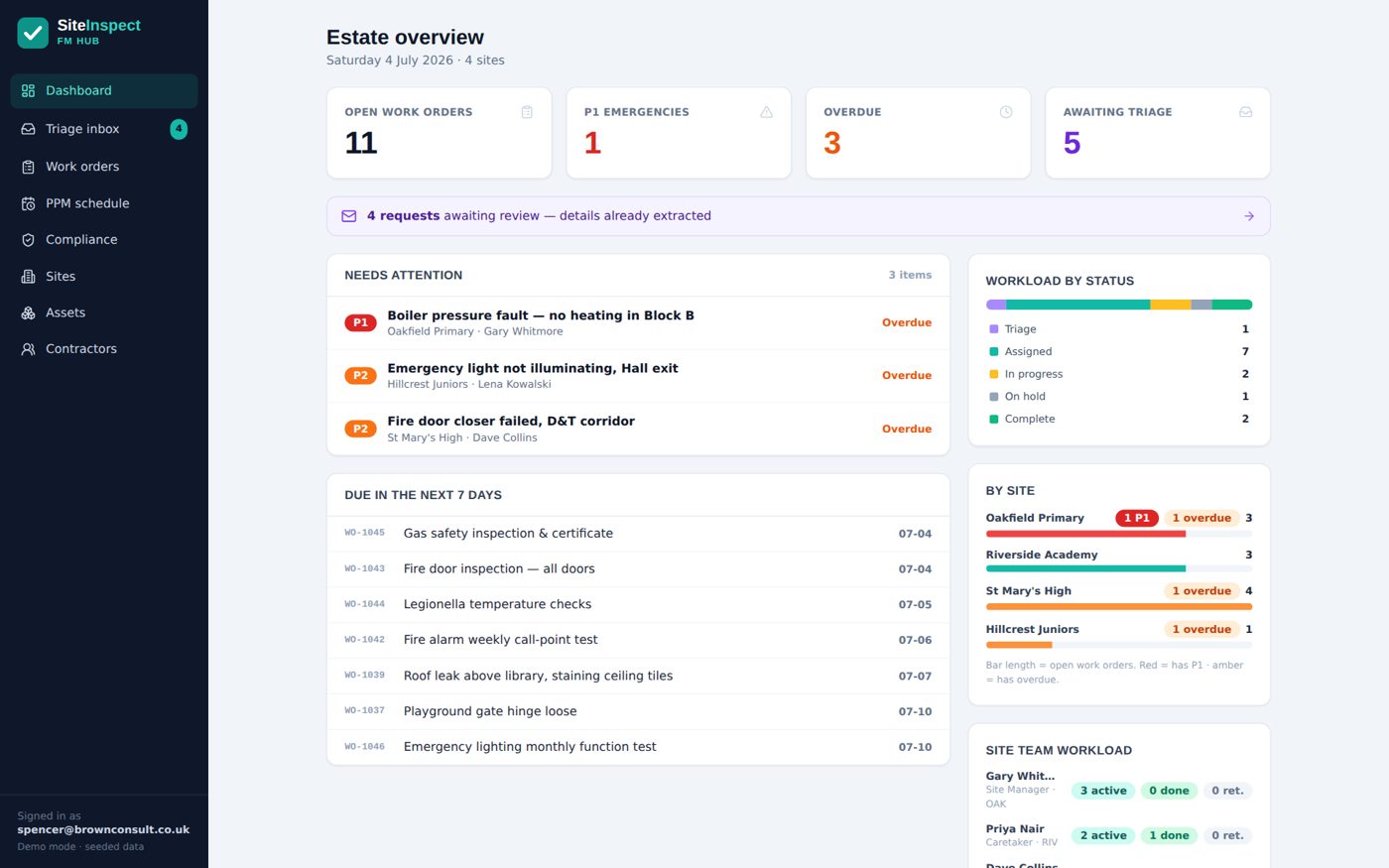
| Remind, chase and escalate | No: a person does this, or nobody does | Automatic: jobs raised before due, contractors chased, overdue on the dashboard |
| Capture evidence at the point of work | No: photos and certificates live elsewhere | Photos, readings and certificates on the record, timestamped and attributed |
| Take reports from all staff | No: one owner types everything | Anyone reports in under a minute; unlimited users |
| Roll forward on completion | Manual: rebuilt every September | Automatic, at each task's frequency |
| Survive staff turnover | Poorly: the regime is the person | The register, history and evidence persist in your tenant |
| Trust-wide rollup | Copy-and-paste, termly, already stale | Live, per school, on one screen |
| Cost | Free in licences; hours every week in practice | From £650 per site per year ex VAT, published |
The middle column is a good spreadsheet: most real ones are three terms out of date. For what the gap costs in emergency spend, run the free cost-of-reactive calculator; for the workload the sheet is silently carrying, the PPM forecast calculator counts your statutory events per year.
Your spreadsheets are the import
The pleasant irony of leaving spreadsheets is that they're the best possible starting point: your sites, assets, contractors and schedules load through EstateProof's validated spreadsheet imports: dropdowns checked, dates parsed, a preview before anything is written. The statutory schedule arrives pre-seeded at standard frequencies for you to correct against your contracts, rather than to build from blank. A school is live with sites and contractors loaded; everything else follows at your pace.
And unlike the sheet on the shared drive, everything lands in your own Microsoft 365 tenant, which means the thing you liked most about the spreadsheet, that it was yours, survives the upgrade. Start with our guide to school compliance software, or the whole-category map.
Questions buyers actually ask
Can a school legally run compliance on spreadsheets?
Yes. No regulation names a tool: the law requires that duties are met and records are complete, dated, attributable and producible on demand. A disciplined spreadsheet regime can satisfy that. The legal question is not the format; it's whether your records would actually stand up when an auditor, insurer or fire officer asks for eighteen months of evidence by Friday.
When is a spreadsheet genuinely enough?
Small single site, few statutory assets, one well-organised owner who isn't going anywhere, and evidence volumes low enough to file by hand. Some schools do fit that description, and for them the discipline matters far more than the software. The picture changes with multiple buildings, staff turnover, photo evidence, contractors to chase, or a trust asking for a rollup.
What does the free option actually cost?
Time, mostly: hours a week of updating, chasing and filing that software automates, multiplied by every site. Then the tail risks: a lapsed contractor insurance nobody noticed, a missed statutory date resurfacing as emergency spend, evidence that can't be assembled when demanded. Our cost-of-reactive calculator puts your own numbers on it.
What can software do that a spreadsheet can't?
Act. A spreadsheet records what a person tells it; software raises the job before the due date, chases the contractor, captures the photo at the point of work, notifies the requester, and rolls the schedule forward on completion. It also survives people: the register doesn't leave when the site manager does.
What does moving from spreadsheets involve?
Less than moving from another platform. Your spreadsheets are the import: sites, assets, contractors and schedules load through validated spreadsheet imports with a preview before anything is written, and the statutory schedule arrives pre-seeded to be corrected rather than built. From £650 per site per year ex VAT, published, with unlimited users.
Find out which side of the line you're on
Three minutes, fifteen questions, scored on the spot: the free assessment tells you whether your current regime holds up. Or see the alternative running in the live demo. Call 020 4558 7729 or email info@estateproof.co.uk.