New site manager? The first-term checklist.
You've inherited a building, a set of keys, and a filing system that made sense to somebody who no longer works here. Somewhere in it are the documents that protect you legally, the dates that mustn't slip, and at least one surprise. This is the checklist for the first term: what to find in week one, what to walk in month one, and what to have fixed by Christmas, sequenced so the urgent protects you while the important gets learned.
Find the paperwork that protects you
Before you fix a single door, know where these live and how current they are. What you can't find is your first finding: write it down and report it, dated.
- The asbestos register and management plan. Read the register before you or any contractor drills anything; the plain-English guide explains what should be in it. Missing or years old? Escalate this one first.
- The written fire risk assessment. Mandatory in full since October 2023. Note its date, its actions, and which are still open.
- Current certificates: gas, electrical (EICR), lifts (LOLER), fire alarm and emergency lighting services. Each has a date; each date implies the next due. Build the list as you find them.
- The legionella scheme and temperature logs. Check the monthly readings actually continued through the last holidays; the who-does-what guide covers why that gap matters.
- The keys, codes and shut-offs. Water, gas, electrical isolation points; alarm panel and its zones; boiler house; roof access. Walk them, don't just list them.
- The contractor list. Who services what, when they last came, and, check this yourself, whether their insurance and DBS documents are current.
- An hour with your predecessor, if humanly possible. The building's folklore (which roof leaks in westerly rain, which zone false-alarms) lives in nobody's filing system.
Walk it, log it, steady it
| By when | Do | Why |
|---|---|---|
| Month one | Walk every space: roofs, plant rooms, ducts, stores. Photograph what worries you | Your condition baseline; nothing dated before your arrival is your doing |
| Month one | Start the drumbeat under your own name: weekly alarm points, door walks, monthly temperatures and lighting tests, logged | The regime must survive the handover visibly; gaps in the log read as gaps in the checks |
| Month one | Reconcile the PPM schedule against actual service contracts and certificate dates | Inherited schedules drift; the calendar guide shows what a sensible year looks like |
| Half-term | Book the year's contractor visits with lead time; chase anything already overdue | Holiday windows go to whoever books first |
| By Christmas | Close or escalate every inherited red item, in writing; run your first drill; give your head a one-page estate summary | One term in, the estate's true position is on record, and it's dated after your arrival |
Two free tools shortcut the reconciliation: the PPM forecast calculator counts the compliance events your estate generates, and the compliance calendar lays your year out from the anchors you choose.
The estate that doesn't need inheriting
Everything on this page exists because the estate's knowledge lived in one person, and left with them. The day book, the spreadsheet, the folder system that made sense to its author: each is a handover problem deferred, and every site manager who follows you will run this same archaeology unless the knowledge moves somewhere persistent.
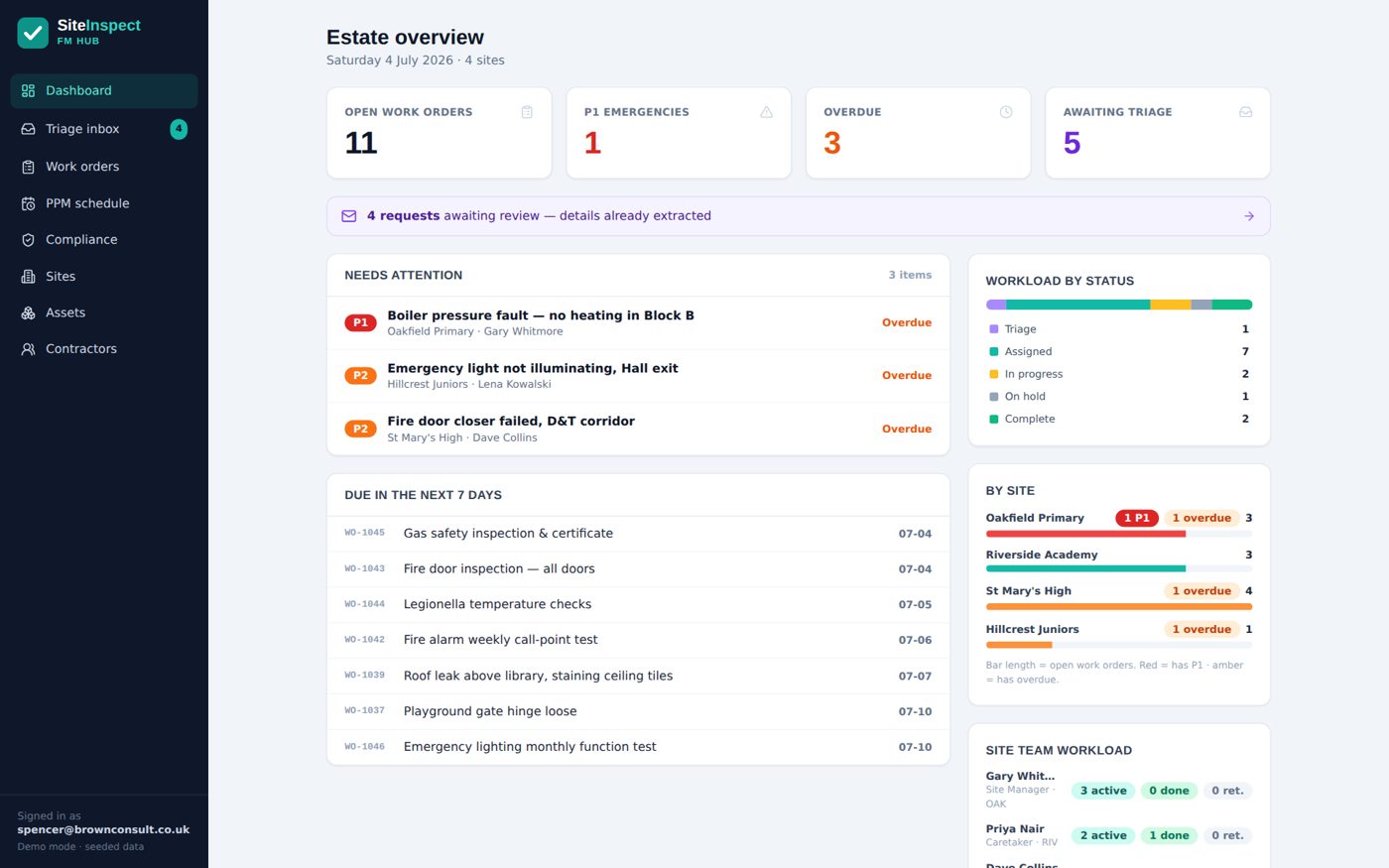
That's the structural argument for running the estate on a system rather than a person: the register, the schedule, the certificates, the photo history and the contractor records live on, attributable and dated, whoever holds the keys. Ours keeps them in the school's own Microsoft 365 (the case is in the maintenance management guide), but whichever route a school takes, the first term is the moment to raise it, while the cost of the alternative is fresh.
Starting the job: the questions that come up
What should a new school site manager do first?
Find the paperwork that protects you before anything else: the asbestos register and management plan, the written fire risk assessment, the current gas and electrical certificates, and the legionella scheme with its temperature logs. Not to read cover to cover on day one, but to know they exist, where they live, and how current they are. What you can't find in week one is your first finding.
What if the records I inherit are a mess, or missing?
Write down what's missing, date it, and tell your line manager in writing: that note is the line between inheriting a problem and owning one. Then rebuild from the statutory backbone: the recurring duties are knowable, certificates can be re-obtained from contractors, and a term of disciplined logging builds a defensible position from almost nothing.
Which handover questions matter most?
The ones nobody writes down: where the water, gas and electrical shut-offs are; which alarm zones misbehave; which roofs leak in which weather; which contractors actually turn up; where the asbestos register says "don't drill". If your predecessor is still contactable, an hour of walking the site with them is worth a month of archaeology.
Should the first term include changing the systems?
Stabilise first, systematise second. Term one is for finding the truth and keeping the drumbeat going; changing how the estate is run is a decision to make once you know what you've got. That said, a new arrival is the natural moment trusts review their setup: day books and spreadsheets survive on the predecessor's memory, which just left the building.
Make yours the last archaeology dig
See what a handover looks like when the estate's knowledge lives on a system instead of in a head, in your school's own Microsoft 365. Call 020 4558 7729 or email info@estateproof.co.uk.